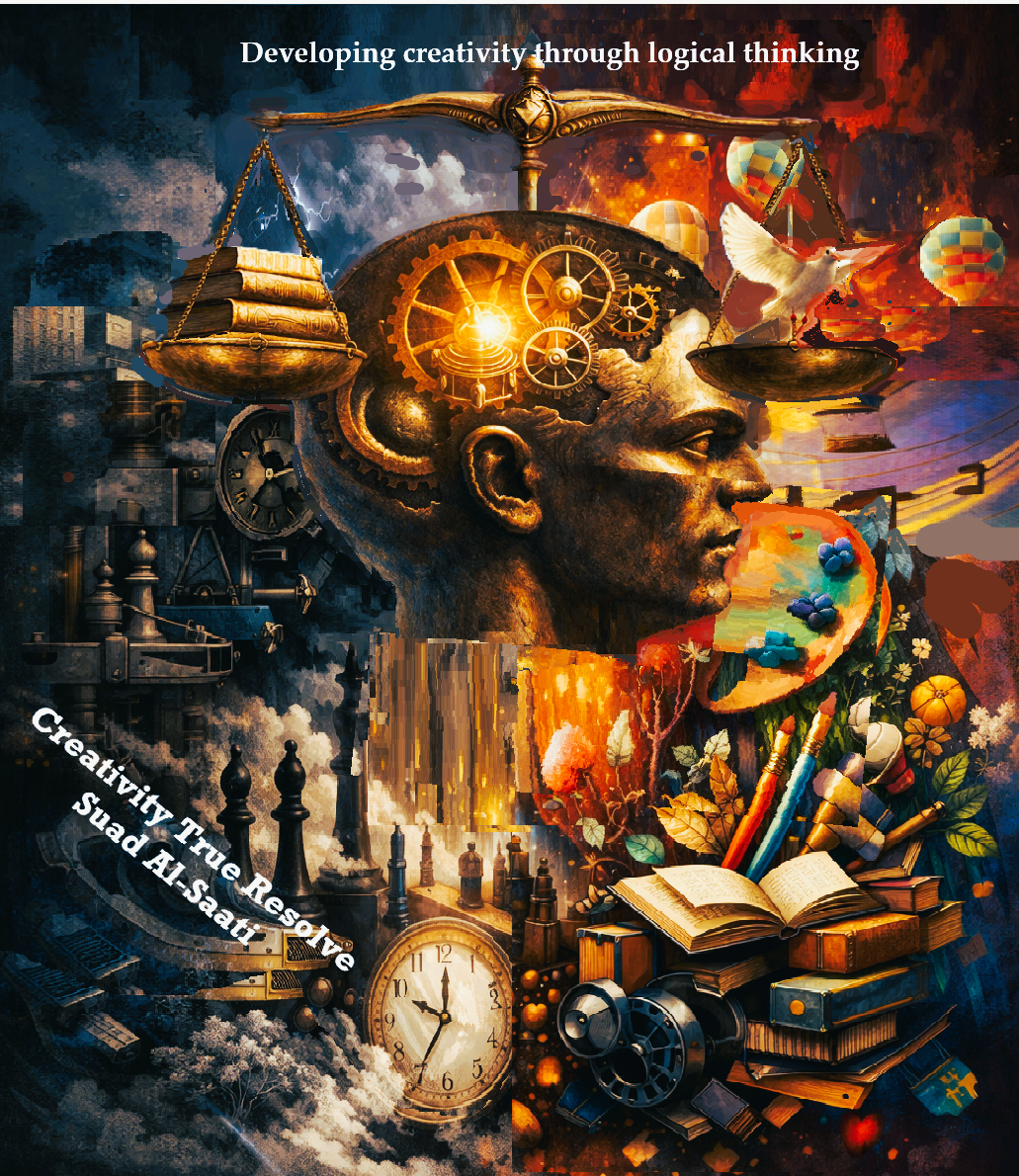
Developing creativity through logical thinking
The importance of logical thinking lies in the mental skill to solve a particular problem, make a sound decision about it, and separate emotions from facts in order to reach a solution.
This opens up a wide field of understanding, through comprehending the connections between cause and effect
Ultimately, this leads to success in professional and academic life, as well as effective interaction with our surroundings.
However, Jan laid down rules for new ideas, studied them, and turned them into a real and organized framework for action, rather than just a passing thought
The innovator can logically generate ideas to solve the problem through analysis, deduction, planning, and organization
In addition, the ideas are subject to clear and rational steps, which provides a framework that helps him to grow systematically.
Moreover, logic is the bridge that transforms flashes of ideas into viable projects, and turns vision into reality.
Developing creativity: In line with meeting the urgent need for it and searching for fertile ground for creativity,
innovative ideas emerge freely, taking on deeper dimensions and diverse forms, to produce a wonderful and unique work.
Human needs are not limited to a specific stage, but continue with development and events.
Minds then become preoccupied with finding solutions,
and this is where the stage of expanding latent capabilities begins, revealing skills we were previously unaware of.
Reflection and intellectual review represent a transition to a deeper level of awareness, going beyond the need for support and appreciation.
The Importance of Logical Thinking
Given the importance of logical thinking in creativity, it forms a solid foundation for growth and progress.
It involves integrating discipline and analysis to establish a firm basis for new ideas, transforming them into a real and organized framework, rather than just fleeting thoughts.
Innovators can generate logical ideas to solve problems through analysis, deduction, planning, and organization
When we subject ideas to clear and rational steps, we don’t stifle creativity; instead, we provide it with a framework that helps it grow systematically.
Logic here is not the enemy of imagination, but rather the bridge that transforms flashes of ideas into viable projects, enabling the innovator to turn their vision into a tangible reality.
Fostering Creativity: In line with the pressing need for creativity and the search for a fertile environment for it,
innovative ideas emerge freely, taking on deeper dimensions and diverse forms, to produce remarkable and unique work.
Human needs are not limited to a specific age group;
rather, they constantly evolve and adapt, becoming a tangible reality that contributes to most practical and essential aspects of life and all stages of education,
as well as secondary aspects that are considered luxuries, inspiring hope for greater creativity.
Thus, the mind is engaged in finding solutions
This is where the stage of developing latent abilities begins, revealing skills we were previously unaware of.
Therefore, the importance of reflection and intellectual review becomes clear, leading to the discovery of more innovative ideas.
Moreover, through continuous development and adaptation, this becomes a tangible reality that contributes to most aspects of life.